There’s a ridge in Atlantic Highlands where a gangster built himself a house. Not rumored — built. Hydraulic lifts under the garage. A tower on the grounds that threw signals out over the water. And next door, a house with a room on the top floor like the cockpit of a ship: a captain’s chair, a compass, navigation gear, a foghorn wired up to warn the whole compound — all of it aimed at the harbor, watching for boats coming in.
By the time Anthony Setaro’s aunt bought the property in 1980, the house itself — the Hammerstein, people called it — was long gone; what stood on the land was an abandoned nursing home that had burned. She bought the ground anyway. Anthony learned to swim in the pool out back, staring up at that tower, with no idea he was floating on top of an old crime scene.
That’s the thing about Anthony. He grew up on top of this history without knowing it — and now he’s the one digging it up.
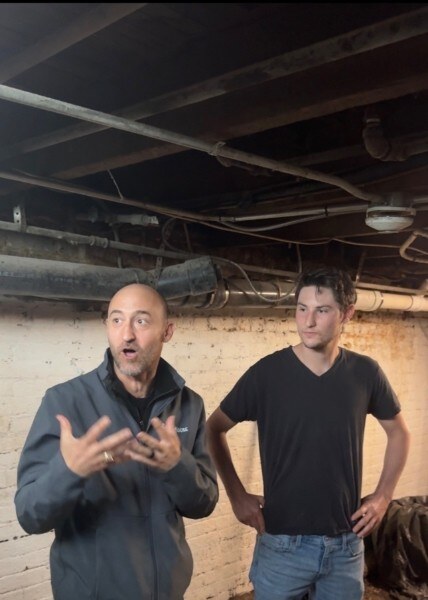
He’s forty-six, born and raised around Red Bank, with an accent he cheerfully calls “spliced up, mashed up” — pure North Jersey Italian. He came up through theater, then film and television, then real estate, and for most of his life those looked like three different careers. They aren’t. They’ve all collapsed into a single obsession, and to understand it you have to go back to an attic.
The name he already knew.
A few years ago his family bought back an old house, and up in the rafters were boxes and a trunk that had come over from Italy in the 1880s — clippings, funeral cards, photographs nobody could name. One night Anthony and his wife were going through the papers, and he found a headline from 1903. His great-great-grandfather, a man named Domenico, had been beaten to death with a hammer in Red Bank.
The paper named the man who did it. And Anthony froze, because the name was already sitting in his own family tree.
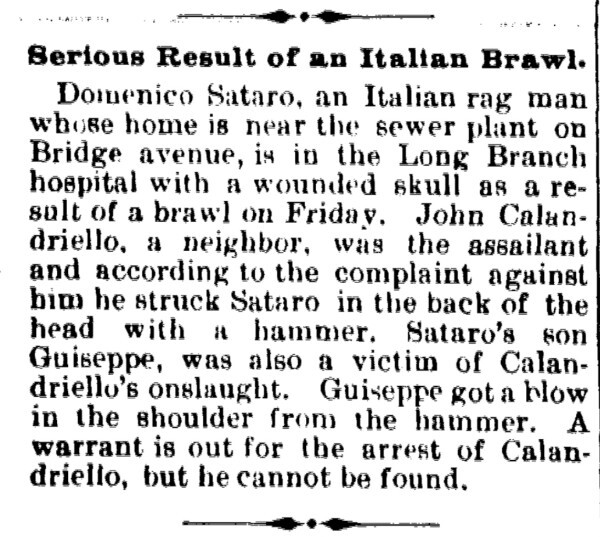
The killer wasn’t a stranger. He was, or was about to become, family — and that’s the part that still gets me. The two families didn’t go to war over it. They merged. The people who did the killing took the victim’s family in and looked after them, the old-country way of settling blood by making everyone one household. A whole branch of Anthony’s family got quietly rewritten, and for three generations nobody said a word. “No one knew,” he told me, and that one lands differently than the rest of his stories — it’s not a fun fact for him. “Every answer gives you three more questions.”
That name from the 1903 clipping is how the whole thing started, because it refused to stay in 1903. The man who murdered Anthony’s great-great-grandfather turned up again and again over the next thirty years — as one of the biggest bootleggers on this stretch of coast, running the trucking end of a liquor operation, standing near some of the era’s most notorious killings, and never once charged for any of it. Anthony went looking for a county file on him and found nothing. Everyone else from that world has a fat folder. This man has air. “Sometimes,” he said, “the answer is where there’s no information.”
Pull one thread in your own family, it turns out, and the whole coastline comes with it.
Built for the mob, and still in the ground.
Because New Jersey was one of the last states to actually enforce Prohibition, this shore became a kind of last stand — the wild edge where the liquor came in before it reached the city, and the locals were already on the payroll. Nobody had to build a criminal network here. It was here. And the part that made me want Anthony to keep talking is how much of it is still there. That ground his aunt bought? When his cousins finally put a shovel in the yard, they dug up the garage — the hydraulic lift, the rusted gear, all of it, sitting under the grass since the 1930s, exactly where the family stories had always said it would be.
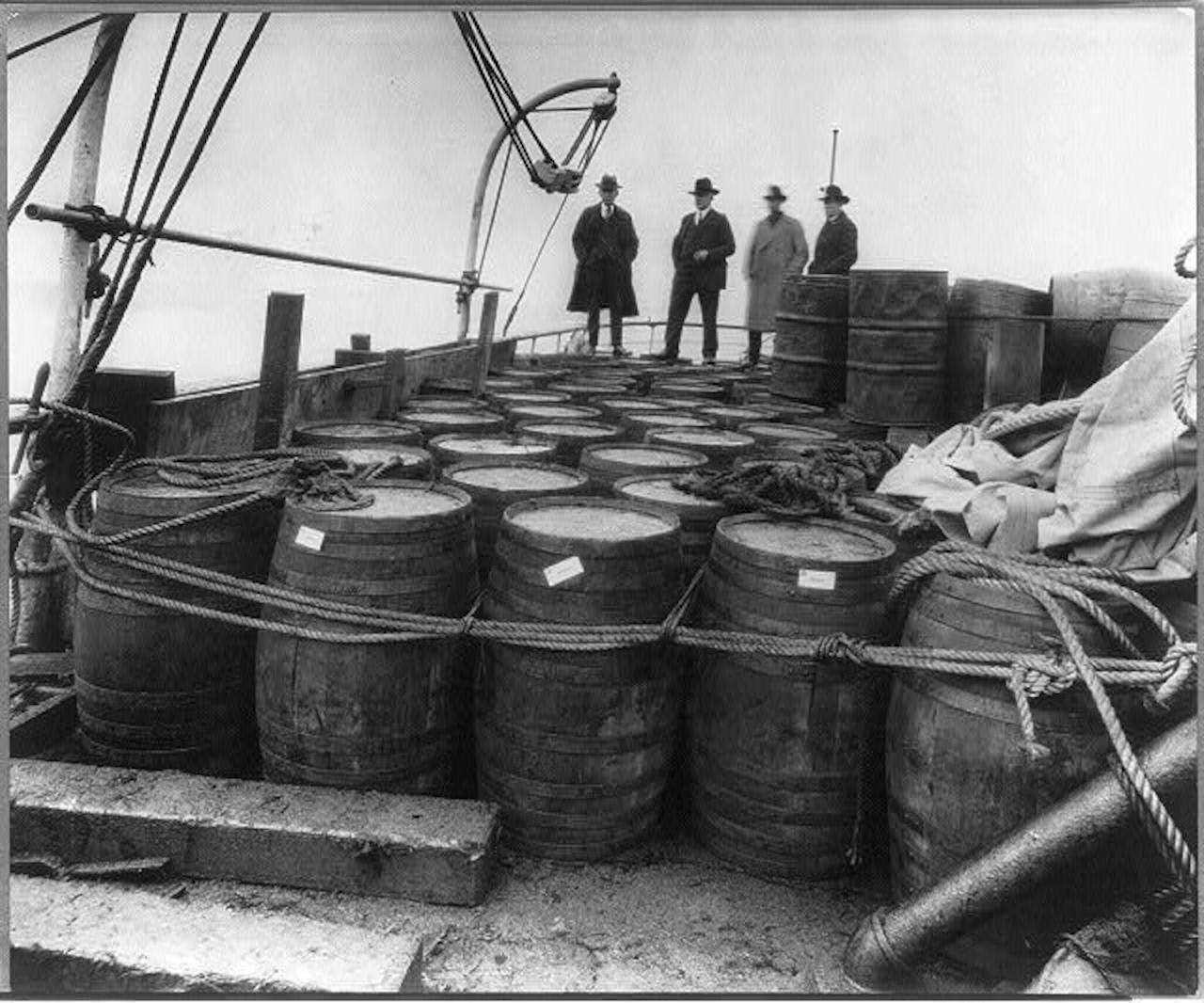
He carries a bottle now that he pulled out of the dirt behind one of those houses — one of hundreds still back there, tossed by bootleggers a hundred years ago and never moved since. He lights up like a kid when he shows it off. “You feel like Indiana Jones,” he said, and he’s not wrong, and he’s not embarrassed about it either. There are places all around here that were built for this — trap doors, false walls, signal towers, a whole coordinated machine hiding under ordinary streets — and most of us drive past them every day without a clue.
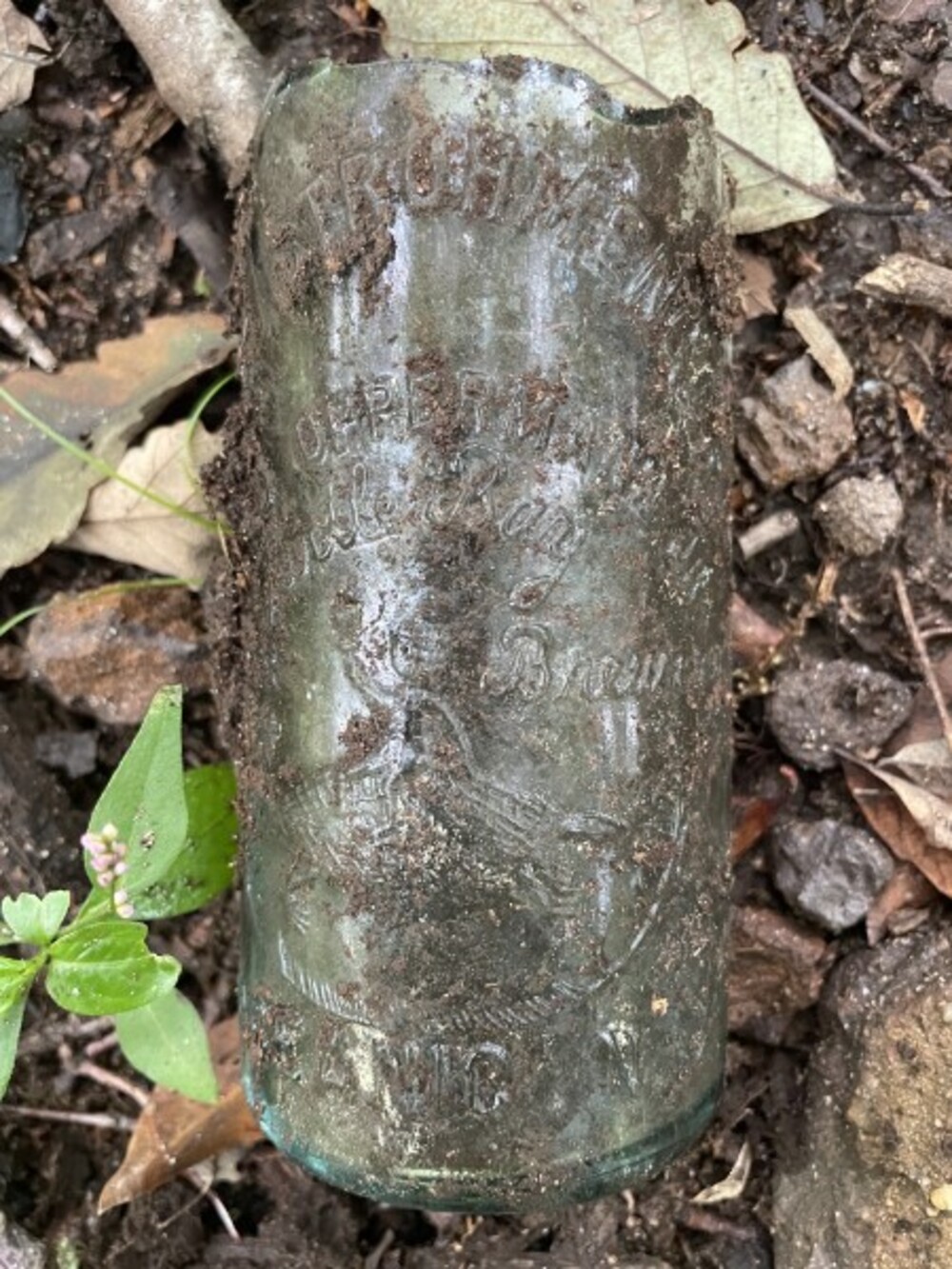
Picture what that era actually looked like here, because it plays like Boardwalk Empire — except it happened on your street. The Ku Klux Klan rode these roads, brought in early as muscle for the temperance crusade, chasing bootleggers through the Highlands hills. The mobsters weren’t just passing through, either; a young Vito Genovese kept a home on this coast. And Twin Lights stood over the whole thing like a castle, its beams sweeping the water — beach and river and boardwalk on one side, hooded Klansmen and rum boats on the other, all of it packed into the same few square miles at the same time.
Twin Lights is also where a young Guglielmo Marconi pulled the first ship-to-shore signal out of the air — and Anthony has a theory about why the inventor, whose mother happened to be a Jameson (yes, that Jameson, the whiskey), cared quite so much about talking to boats sitting offshore. It runs a wire straight from the man who invented modern radio to the liquor coming into these coves. But that one you’ll have to hear him tell it himself, on the podcast.
Putting you back inside 1924.
This is where the theater kid, the filmmaker, and the realtor finally turn out to be the same person. Because it isn’t enough for Anthony to find this world. He wants you to be able to stand in it.
So he’s rebuilding it. It has a name now — Setaro House, a production company he runs out of a 130-year-old home in Red Bank — and he and a cousin have gone deep into the exact tools Hollywood uses to conjure entire worlds out of nothing: AI, digital humans, and the game-engine virtual production behind shows like The Mandalorian, where actors perform in front of enormous LED walls instead of green screens. They’re pointing all of it backward, at the Shore that’s gone.
The roller coaster that once stood over Highland Beach. The old Highlands bridge. A downtown that pulled twenty thousand people off steamships and trains on a single summer day. Colorize an old black-and-white photo, then build the whole street around it in 3D, and suddenly you can walk it. He calls the thing a storytelling sandbox — “a Marvel Universe, but for this area.”
Sit with the timing of that for a second. A local historian is teaching himself the precise technology that’s about to make this coast the East Coast’s next film hub — the LED stages, the virtual sets, the Netflix money landing at Fort Monmouth fifteen minutes up the road — and he’s aiming every bit of it at 1924. The tools that will build Hollywood East are the same ones he’s using to prove it was already something, a hundred years ago.
Before the stories die with the people who hold them.
His book — Rum on the ’Sink, named for the Navesink, which is what the Shrewsbury was called before somebody renamed it — has been “coming this summer” for a couple of summers now, and he knows it. It won’t sit still. Every draft, another cousin surfaces with another photograph, another correction, another thread. What began as a genealogy hobby has turned into something closer to investigative local journalism, run right out in the open: he posts a fragment online, and somebody’s grandmother’s saying comes back to finish it. He isn’t so much writing the history down as coaxing it out of people before it dies with them.
And it nearly did. That’s the whole urgency of it. The people who can still confirm these stories are almost gone, and a generation was handed the clean version on purpose.
I grew up in the middle of Pennsylvania. When I moved to this coast I figured I’d landed somewhere pretty and a little sleepy, and it took me an embarrassingly long time to feel the century running underneath it. Anthony’s walked on it his whole life — learned to swim on top of it — and even he says he’s only now bringing it up into the light.
That’s the part I can’t stop thinking about. It was never sleepy here. We just weren’t looking. And now there’s a guy from Red Bank with a game engine and a dug-up bottle, quietly making sure the rest of us finally do.
Anthony Setaro is on Instagram at @anthonyjsetaro, and his studio lives at setarohouse.com. This one came out of a sit-down on the podcast with my co-host, Eric Kane — @abovethehook — whose own Highlands history ran here in Vol. I.