Stand on top of Mount Mitchill in Atlantic Highlands and you are standing on the highest natural point on the Atlantic seaboard south of Maine. Two hundred and sixty-six feet, straight up out of a coastline that stays flat for hundreds of miles in either direction. From up there you can see Sandy Hook, the whole sweep of the bay, and the Manhattan skyline sitting on the horizon like a rumor.
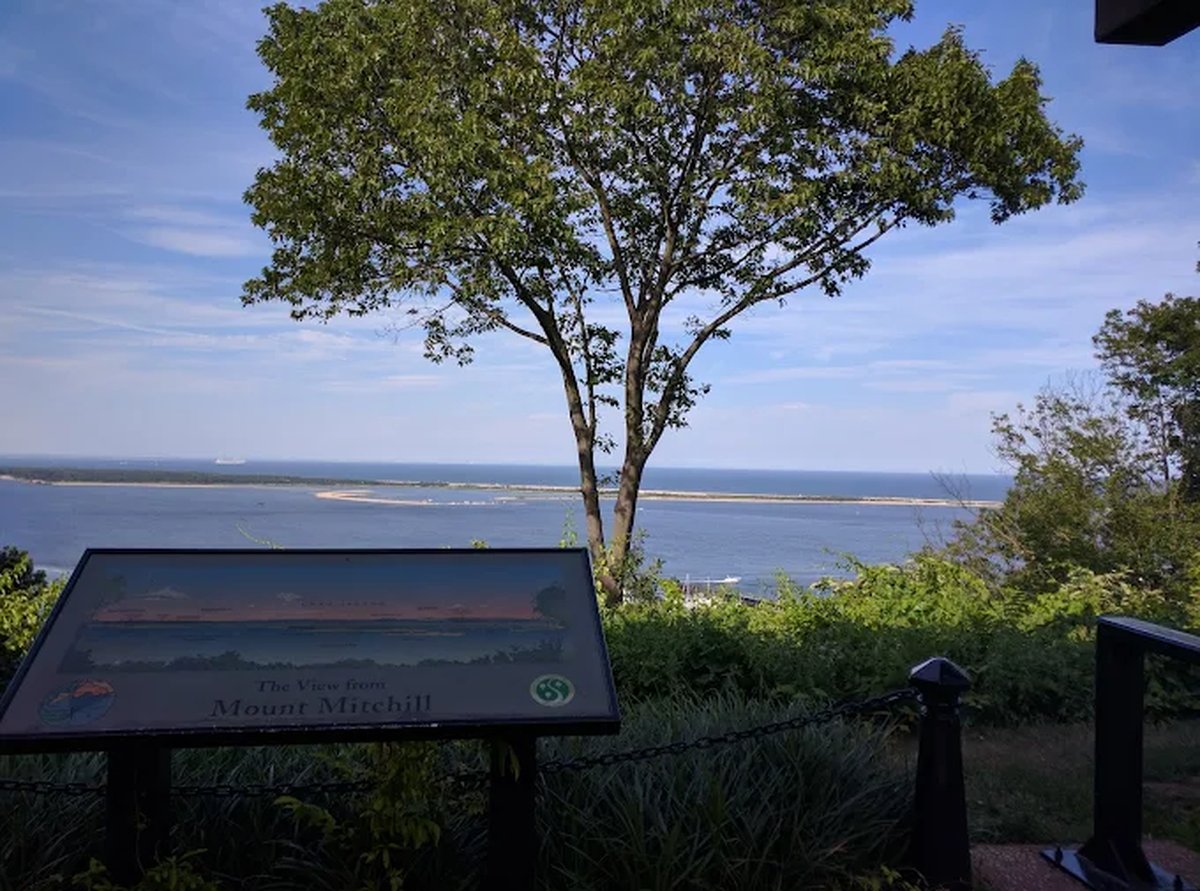
This is the gateway, and not in a brochure way. Henry Hudson is said to have clocked these highlands in 1609, because after a few hundred miles of flat coast they were the first thing worth looking at. The British Navy sat on Sandy Hook through the Revolution. The federal government didn’t even bother with a metaphor — Sandy Hook is officially part of Gateway National Recreation Area. For four centuries this was the front door to the New World, the first high ground anyone saw coming in.
So here’s the question nobody around here seems to ask: why does nobody talk about it? One of the most consequential stretches of coastline in America, and the wider world knows it, if at all, as the place with the good chowder.
One guy decided that was a problem. His name is Eric Kane, he runs a brand called Above the Hook, and he built the whole thing from the second-floor deck of his house in Highlands — which he calls “the second.” When his fiancée Mary asks where he is, the answer is reliably “up on the second.” From that deck, in under a year, he became one of the most-followed names in this part of Monmouth County. An influencer, technically. The word undersells it.
Nine months.
Above the Hook did not exist a year ago. Eric and Mary built it from a standing start in early September 2025 — domain, Instagram handle, website, a first run of apparel Mary designed. In the time it takes most brands to agree on a logo, the page took off.
Here’s the part that doesn’t compute if you think of it as a clothing company: the clothes sell, but he never pushes them. He wears them, puts them in the videos, and they move — not because anyone got sold, but because people want to be part of what he’s building. I’m not here to push product, he says, and that’s exactly why the product moves. They weren’t going to be the tourism board, and you need something to put your name on. The hoodie is just how you wear the place. The place was always the actual product.
His first ad is still pinned to the page: a deliberately janky thing built to look like an old Windows desktop, a couple photos of the clothes, a line announcing a merch brand. It did not work. He’ll be the first to tell you it did not work. He kept it anyway, because he likes how vintage it looks — which is either terrible marketing or the most honest marketing there is, and with Eric it’s usually both. That’s the whole operating system: make the thing you’d actually want to look at, put a few dollars behind whatever lands, repeat.
The kind of influence that shows up.
Yes, he’s an influencer. Here’s what that word can do for a place when the person holding it actually cares. Last spring he teamed up with the National Park Service and a local crew called the Making Waves Coalition to run a beach cleanup out on Sandy Hook. The Park Service caps how many volunteers you’re allowed to bring — permits, safety, the usual. Eric made one post about it on a Friday. The slots filled immediately.
That’s the whole thesis in a single afternoon. He posts the place he loves and people don’t just double-tap it — they show up and pick up trash. He’s fond of a model that proves the point: a few years back an account called Visit Faroe Islands pulled a wave of tourism to a remote stretch of Denmark, but because it showed the place with respect, the visitors turned up already respecting it. They didn’t litter what they’d been taught to find beautiful. That’s what Eric is quietly running here. His brand isn’t the clothing, and it isn’t the magazine. His brand is his love for this area — and it turns out that’s contagious.
The historian nobody appointed.
What Eric really does is talk to people. He went down and filmed Milton, one of the kite surfers who work the wind off Plum Island, and ended up in their group chat — so now he knows every time the conditions are right. For one shot he lay flat on a six-foot sandbar so Milton could launch clean over the top of him. Eric’s creative contribution there was lying down and trusting a stranger on a kite not to land on his face. That’s not a content calendar. That’s a man collecting a town.
It’s how you get the story behind Bahrs. The Cosgroves run what’s billed as one of the oldest family-run restaurants in the country — Jay is the fourth generation — and the whole place started in 1917 as a beached houseboat. Before the railroads, barges hauled goods up the canals; when the canals went quiet, they got floated down to coastal towns and turned into bed-and-breakfasts that bobbed in the river. Somebody beached one on the Highlands shoreline and started cooking chowder. No crane — by Eric’s telling they walked it up the sand on the tide, inch by inch, jacking it higher every time the water came in. That original houseboat is still the room you eat in. (So, yes — the good chowder. We’ll allow it.)
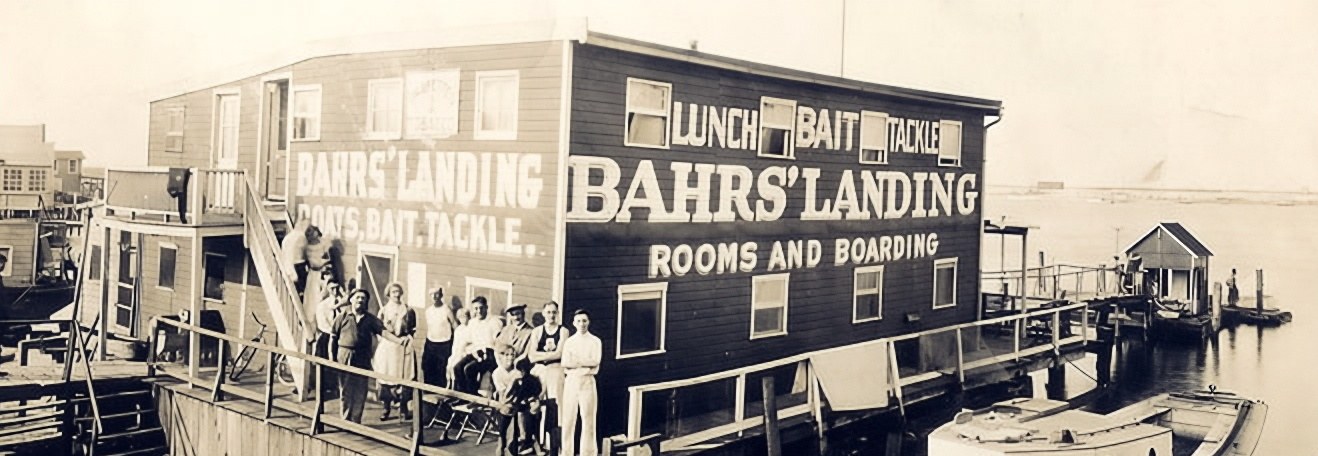
You only know that if you ask, and Eric asks. A historian isn’t a person with a degree — it’s a person who cares enough to sit down with the fourth-generation guy and let him talk until the good part comes out. And the proof he’s a historian and not just an influencer is what he won’t post. There’s a spot in Highlands — a rite of passage, he calls it — that he refuses to put on the page. Other people have posted it. He won’t. Some things, he figures, should stay sacred and a little bit secret. An influencer posts whatever performs. Eric knows the one thing the town would rather he kept quiet, and he keeps it quiet.
Bringing it back in color.
Then there’s the thing nobody else thought to do. He takes a black-and-white photograph of Highlands from seventy years ago — a storefront, a stretch of river, a street that’s half gone now — and he brings the color back. Then he makes it move. A flag lifts, the water shifts, and a flat gray rectangle becomes a Tuesday afternoon somebody actually lived through. The tools are new; the instinct is old. He’s a guy who wants you to see it.
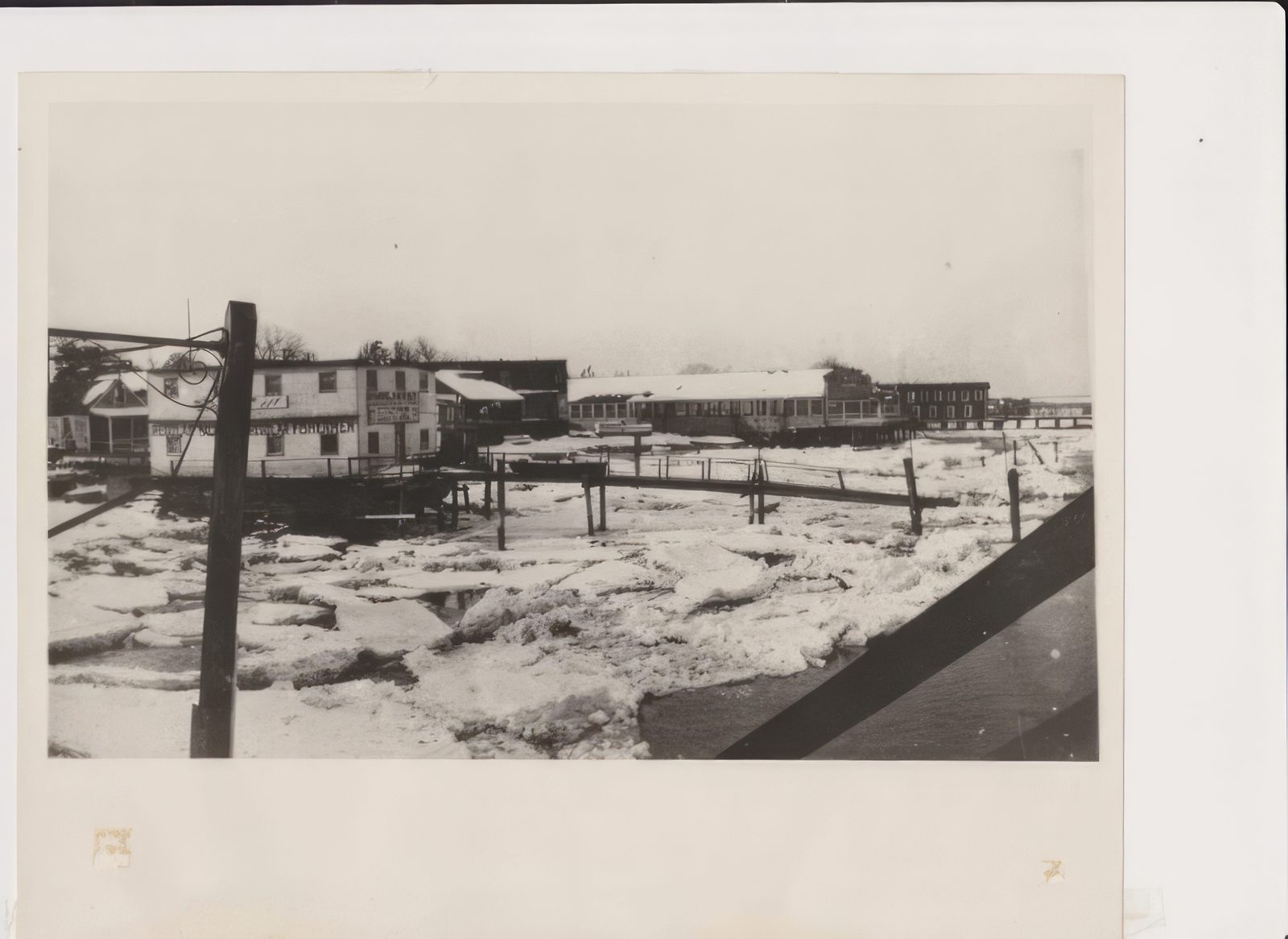
When he started posting those, the stories came out of the woodwork. Older folks, mostly — people who grew up here and moved away and never stopped missing it. They’d send long messages about jumping off the old Highlands bridge back when it sat low enough to the water that you could, which you can’t anymore. About dogs roaming the streets, kids clamming and biking and swimming the river. True Americana, he calls it. Give a person the picture back and they hand you the memory.
What he’s really making.
Above the Hook prints something every quarter, though Eric won’t quite commit to the word magazine. The first one was winter — the river freezing over, the old ice trade. The current one, shipped to subscribers today, is spring. It’s called The Return. Next quarter might be all photographs. Might be a book. Might be a newspaper. He’s keeping it loose on purpose, which is a luxury you only get when nobody’s paying you to be consistent.
Restaurants and shops sponsor the prints — Bahrs, In the Garden, Highlands Cafe, Saltwater Social — and the result reads less like advertising than like a yearbook for a town that didn’t know it wanted one. Something for the coffee table, he says. A record, season by season, of the things he figured were worth keeping.
What I want to say without making it weird.
Eric will hate this paragraph. I’m going to write it anyway.
Eric does for a whole town what I spend my life trying to do for one client at a time — he makes you look at a place you’d stopped seeing. He isn’t selling you the Highlands. He just pays enough attention to it that you remember it’s worth paying attention to. That’s rarer than talent. Most people who build the kind of reach he built in nine months point the camera at themselves.
He points it at the place. The place points back.
The highest ground on the seaboard south of Maine, the front door to the New World, and it took a guy on a second-floor deck in a merch hoodie to make anybody notice. Figures. Best things around here always hide in plain sight.